
The Common Diagnoses You Need to Know for the CPE
If you've started studying for the Clinical Proficiency Examination, you've probably already found the AVMA's official "Common Diagnoses" reference document, the appendix that lists the entry-level conditions you're expected to recognize across five species: cattle, sheep, goats, horses, dogs, and cats. It's organized by body system, from alimentary to urinary, and it's the single clearest signal AVMA gives candidates about what "day-one-ready" clinical knowledge actually covers on the CPE.
But here's the thing about that document: it's a list. It doesn't tell you which conditions show up on a rotation every week and which ones you might go your whole career without seeing. It doesn't walk you through what a case actually looks like when it's standing in front of you. And for candidates trained outside North America, a few of these diagnoses are going to be genuinely unfamiliar, not because your education was lacking, but because your caseload, your region, or your species mix simply didn't include them.
So instead of reprinting the list, let's talk about how to actually use it: what's truly bread-and-butter, what tends to catch candidates off guard, and what a few of the trickier presentations look like in practice.
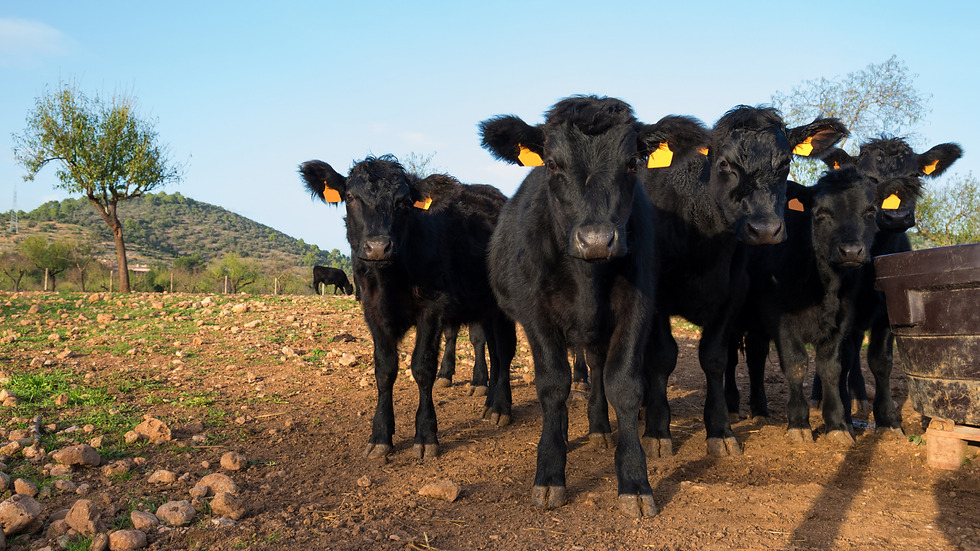
Cattle: the workhorses of the food animal section
If you only have time to nail down a handful of cattle conditions, make them the metabolic and udder-related ones: they show up constantly in real practice, and the CPE reflects that. Hypocalcemia (milk fever) is a classic: a periparturient dairy cow that's suddenly down, weak, cool to the touch, with reduced rumen motility. Ketosis often follows a similar timeline: off feed, dropping milk production, sometimes with that telltale sweet, acetone smell on the breath. And mastitis is about as bread-and-butter as it gets in dairy medicine: heat, swelling, pain in the udder, and visibly abnormal milk.
Where things get more interesting is further down the list. Vagal indigestion (vagal syndrome) is a condition a lot of candidates haven't worked up firsthand: chronic bloat, reduced fecal output, and weight loss caused by vagus nerve dysfunction rather than a simple diet problem. It's easy to under-recognize if you haven't seen it before, because the presentation can look like "just" indigestion until you dig deeper. Actinomycosis (lumpy jaw), a bony, often draining swelling of the mandible or maxilla, is another one that's common in some management systems and essentially unheard of in others, depending on soil and forage conditions where you trained.
Sheep and goats: don't skip the small ruminants
Small ruminant medicine gets less attention in a lot of curricula, which makes it worth deliberate review time. Pregnancy toxemia in late-gestation ewes and does, especially those carrying multiples, is one of the most clinically important conditions on the list: lethargy, going off feed, and neurological signs if it progresses. Caseous lymphadenitis, with its characteristic abscessed lymph nodes, and footrot/foot scald, presenting as lameness with interdigital inflammation, round out the conditions you're likely to see repeatedly.
Two worth flagging as less familiar: caprine arthritis encephalitis (CAE) in goats can present as chronic weight loss and arthritis in adults, or neurological signs in kids, and it's a diagnosis a lot of candidates haven't had reason to work up serologically before. Contagious ecthyma (orf), meanwhile, causes proliferative, crusting lesions around the lips and muzzle, visually memorable once you know it, and worth remembering that it's zoonotic, which matters both clinically and for your own safety in a hands-on exam setting.

Horses: colic isn't the only thing you need to know
Colic gets the reputation as the defining equine emergency, and for good reason; knowing how to differentiate medical from surgical colic is genuinely central to the equine section. Laminitis is similarly iconic: a reluctant-to-move horse, a classic rocked-back stance, and bounding digital pulses. And recurrent airway obstruction (equine asthma) chronic cough and increased respiratory effort, often worse in dusty or poorly ventilated environments is common enough that you should be comfortable describing its management, not just its name.
The conditions that trip candidates up tend to be the ones tied to specific disciplines or referral-level caseloads. Wobbler syndrome (cervical vertebral instability) causes ataxia in young, growing horses and is a diagnosis you're less likely to have made if your training didn't include much sport-horse or breeding-farm exposure. Exercise-induced pulmonary hemorrhage, presenting as epistaxis after strenuous exercise, is strongly associated with racing populations, familiar if you trained near a track, unfamiliar if you didn't. And pituitary pars intermedia dysfunction (equine Cushing's) is worth knowing cold given how often it comes up in older horses: a long, curly coat that doesn't shed properly, along with weight changes and a higher risk of laminitis.
Dogs and cats: don't assume small animal is "the easy one"
It's tempting to assume the small animal sections will be the most comfortable if you've done a lot of companion animal work, but the CPE's list includes plenty of conditions that are easy to under-prepare for. Otitis externa and osteoarthritis are about as common as small animal presentations get, and diabetes mellitus, with its classic increased thirst, urination, and appetite alongside weight loss, should be second nature. In cats specifically, hyperthyroidism deserves real attention: weight loss despite a good or even increased appetite, tachycardia, and often a palpable thyroid nodule.
For less familiar territory, immune-mediated hemolytic anemia can be a dramatic presentation — pale or icteric mucous membranes and a regenerative anemia, and it's a diagnosis candidates with limited small animal internal medicine exposure sometimes feel shakier on. Feline infectious peritonitis has a reputation for being diagnostically tricky, whether it presents as the effusive or non-effusive form, and it's worth reviewing even briefly given how often it comes up as a differential in young cats. And degenerative myelopathy, progressive, non-painful hind-limb weakness in older large-breed dogs, is easy to confuse with intervertebral disc disease on first impression, even though the workup and prognosis are quite different.
How to actually study from this
The official AVMA document is organized by species and body system for a reason; it mirrors how the CPE itself is structured, and it's the best possible skeleton for a study plan. But a list of names doesn't build recall under exam pressure. The candidates who do well tend to work through it condition by condition: what's the classic presentation, what's on the differential list, and what would you actually do in the room. If a diagnosis on the list is unfamiliar to you, and for most candidates, a handful will be, that's exactly where your study time is worth the most.
This is the kind of gap CPE Bootcamp was built to close. Our species-specific modules walk through exactly these conditions with real case material, not just terminology, so the diagnoses you've never worked up in practice stop being the ones you're least prepared for on exam day.
Sources: AVMA "Common Diagnoses" reference document (CPE candidate appendix). Clinical descriptions above reflect general veterinary knowledge for exam-preparation context and are not a substitute for full clinical references or textbooks.


Comments